
What a Brea Resident Lookup Covers
A name search is only useful when the record type matches the question. The following coverage map separates ownership, an event, a public role, and a historical lead. It also shows why a Brea resident lookup may stop even when the person is real: the source may be self-only, confidential, sealed, restricted, or limited to a named record.
| Record | What It Confirms | Brea Route | Access |
|---|---|---|---|
| Assessor and tax parcel | Parcel, ownership interest, assessment, mailing administration | Orange County Assessor and ParcelQuest gateway | Public fields vary; counter verification |
| Recorded document | Party tied to a deed, lien, date, or legal land description | Orange County Grantor-Grantee Index | Free index; order copy |
| Voter registration | One person's status, address, districts, and participation history | Orange County Voter Lookup | Self lookup; bulk file restricted |
| Court case | Party role, case number, filing date, status, disposition entries | Orange County Case Access | Current online; older index at justice center |
| Vital record | Event identity, date, place, and permitted relationship fields | Orange County Clerk-Recorder or CDPH | Informational versus authorized rules |
| Probate file | Decedent, representatives, heirs, and estate filings when public | Orange County Probate Case Access | Redaction and sealing rules apply |
| Business or license record | Entity affiliation, credential status, address of record | California SOS, DCA, or board portal | Official public fields |
| Unclaimed property | Name, reported city or ZIP, holder and property clue | California ClaimIt | Free lead; proof needed to claim |
Use the table as a routing tool. If the clue is an old address, parcel and deed records belong first. If the clue is a family event, the vital custodian matters more than a property roll. If the goal is a public business connection, an entity or license record may be the cleanest official answer.
Avoid Brea's Same-Name Trap
Orange County indexes can return several people with the same surname and given name. Preserve every spelling, middle initial, reversed name order, and business form. Do not collapse “John A Smith” and “John Smith” simply because both appear in Brea. A court party role, APN, spouse, entity number, approximate date, or legal description can separate one record from another.
Require two independent anchors before calling the result a match. One anchor can be a name and date. The second can be an APN, tract and lot, spouse, case role, business entity, or an address shown in a separate source. A mailing address can locate an owner who lives elsewhere, so it is a clue and not a residence conclusion.
- Docket
- The court's organized case record, including filings, hearings, and event entries.
- Disposition
- The recorded outcome or status of a case, which can be different from a filing or allegation.
- Index
- A search aid that summarizes or points to a record; it is not the full file.
- Certified copy
- A copy issued with the custodian's certification, subject to the record's eligibility rules.
When an index is unclear, ask the custodian to explain a field or use the official copy process. A clerk can identify a public filing path but should not be asked to certify that two name results describe one human.
Verify Brea Property Without Assuming Residence
For an address-linked Brea resident lookup, search the Assessor gateway by situs or APN, record the parcel geometry and legal description in the OC GIS viewer, and keep the mailing field separate. The Assessor may show an assessee or owner and property characteristics. The GIS viewer can show the adjacent lots. Neither source lists every person inside the building.
The recorder search follows names, not addresses. Search the displayed owner as a grantee, identify a likely acquisition deed, and match the legal description or APN. A deed of trust, lien, reconveyance, or trustee entry may be part of the result without being an ownership transfer. Tax bills and a mailing destination can corroborate administrative ownership, but they do not prove present occupancy.
For a full address trail, the Brea street directory workflow keeps the parcel, permit, deed, and historic sources in their own lanes. A one-person result should not be expanded into a list of neighbors.
Use Orange County Case Name Search
The Orange County Superior Court Case Access service is the main court path for a Brea name. The court separates civil, criminal and traffic, family, probate, and small-claims access. Start with a person or business name, then add the first name for a person. A case number is an alternative path when known. Choose the case category that matches the clue instead of assuming that one search covers every division.
| Person or business mode | Choose a natural person or organization. |
|---|---|
| Last or business name | Required on the name path; preserve the legal form. |
| First name | Conditional person field; add it to reduce same-name results. |
| Case type | Civil, Criminal and Traffic, Family Law, Probate, or Small Claims. |
| Case number | Alternative direct lookup in the appropriate case portal. |
| Search | Returns matching case identifiers and basic public information. |
Orange County says records may be searched from 1889 to the present. Current case information is online, while prior-year indexes not online remain at the relevant justice center. North Justice Center in Fullerton serves many northern-county matters, but the case designation controls. Older files can be off-site and may take several days to retrieve.
Use the result to capture case number, case title, party role, filing date, courthouse, status, future event, and register-of-actions entries. A plaintiff is not a defendant, a petitioner is not a respondent, and a decedent in a probate case is not necessarily the person whose estate is being administered by a named representative.
Move From Court Index to Actual File
A court index and a court file are different products. Eligible electronic documents may be purchased or downloaded through Public Access. Paper copies are generally charged per page, certification has a separate fee, and a search that takes more than ten minutes can carry the statewide search charge described by the court. An old non-imaged file may require an in-person request and a valid photo ID deposit.
Criminal mail searches use Form L-3009. The form asks for the case number if known, full name, date of birth, driver's-license number if known, violation place and date, requested documents, and requester contact. Mail a check payable to the Clerk of Court and include a self-addressed stamped envelope. If the exact amount is unknown, the instructions allow “not to exceed $25.00.” The listed completion estimate is seven to ten working days.
Adoption, juvenile, family, sealed, and restricted files do not become public merely because a name appears in an index. California Rule of Court 2.503 limits remote access, and Rule 2.550 governs sealed records. A court clerk may explain how to request a public record, but the index should never be treated as a full identity file.
Verify Your Own Brea Voter Record
The Orange County voter lookup is designed for a person checking their own registration. The documented Verify workflow uses date of birth and the last four digits of a driver's license. A successful match can return registration status, current address, polling place, districts, elected officials, vote-by-mail or ballot status, and participation history. Private identity fields such as a signature, full date of birth, or driver's-license data are not ordinary public output.
An approved full-file request is tightly different. The applicant must state a permitted purpose, identify geography and fields, list recipients, describe storage and destruction, sign a wet application, provide identification, and pay through the county's process. The Registrar says applications are submitted in person or by mail to 1300 S. Grand Avenue, Building C, Santa Ana. Email and fax are not accepted for that order path.
Do not use the self service as a surname directory. Safe at Home participants can register confidentially, and protected records may be omitted from an authorized product. Absence from a public result is therefore not a conclusion about a person's location.
Brea Vital Record Copy Types
Birth, death, and public-marriage records can be requested through the Orange County Clerk-Recorder or CDPH, but California separates informational certified copies from authorized certified copies. An informational copy is marked for information and is generally available for most nonconfidential events. An authorized copy is limited to an eligible requester, requires a sworn statement, and commonly requires notarization on a mailed request. Confidential marriage copies are limited to a spouse or court order under Family Code section 509.
CDPH's VS forms ask for the applicant and contact information, record type, registrant or decedent, spouses or parents as applicable, event date and place, purpose, number of copies, relationship checkbox, signature, and payment. The state fees noted for 2026 are $31 for birth, $26 for death, $19 for marriage, and $18 for a dissolution certificate. Orange County's county fee schedule can differ and should be checked at the time of order.
For divorce, Orange County Superior Court supplies the signed judgment and pleadings. CDPH supplies a certificate or summary only for the years held in its index. Adoption and delayed-registration files have separate restrictions. A vital result is strongest when the event, place, and relationship fields all fit the person being traced.
Brea Business and License Clues
A business or license record can verify a public affiliation without proving a home address. California Secretary of State bizfile can return entity name and number, status, formation or jurisdiction, principal and mailing addresses, agent for service, and Statements of Information. Orange County fictitious-business-name records can connect a trade name to a registrant. The California Department of Consumer Affairs search can show license type or number, status, issue and expiration dates, address of record, and public discipline.
The California Secretary of State bizfile search is the official entity route.
The bizfile search image above leads to the official entity portal. Read Statements of Information over time, then compare a county FBN, Brea permit, or court case. A registered agent may be a service company. An office or mailing address may be shared by many entities.
The California Department of Consumer Affairs license search provides the second official lookup route.
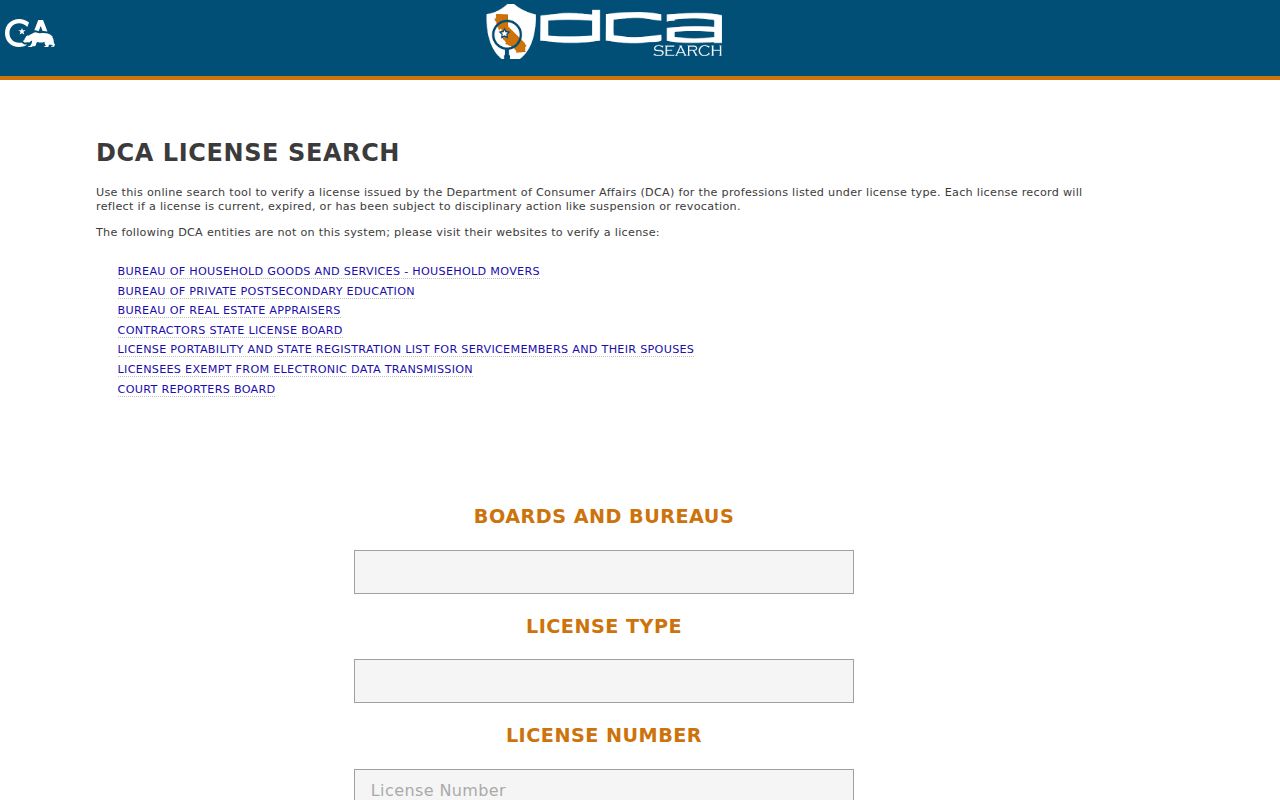
The DCA interface is a second official check for a credential or public address of record. Board detail varies, so read the result fields and the board's own instructions rather than treating a search card as a complete biography.
Use ClaimIt as a Secondary Brea Lead
California's State Controller ClaimIt search accepts a required last or business name or property ID, with optional first name, city, and ZIP. Searching Brea with 92821 or 92823 can return a reported owner, city, ZIP, holder, and property clue. It is a lead about unclaimed property, not a current Brea residents directory. A successful claim requires proof and the Controller's process.
The California ClaimIt search is free and should be used as a secondary clue.
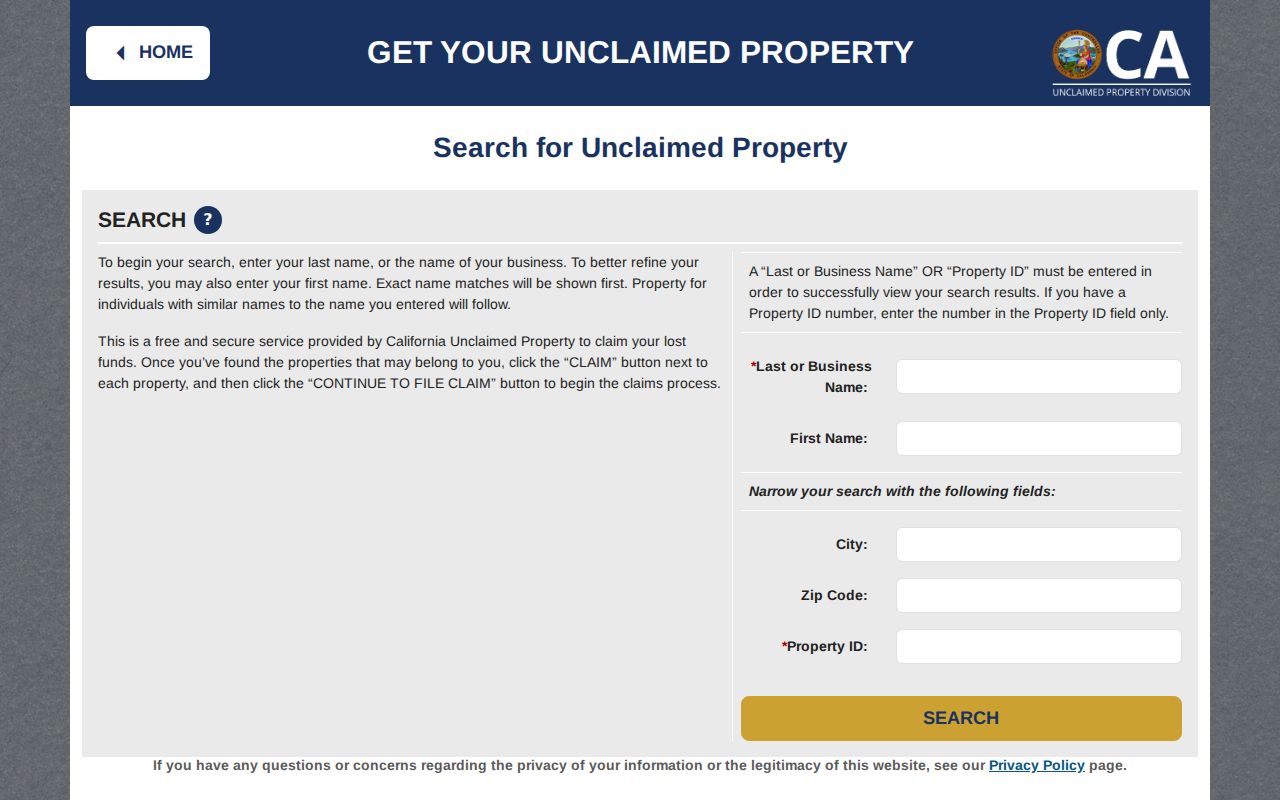
The ClaimIt screen pictured above shows why a ZIP can narrow a state search without proving a present home. Cross-check a reported address with an official deed, court, business, or vital source, and use the free state service rather than paying an unsolicited finder.
Heirs, Birth Parents, and Former Classmates
Some resident lookup questions need a specialized channel. For an heir, search Orange County probate by decedent or party, read public petitions and notices, and then compare estate-related recorded instruments. For a birth-parent or adoption question, California adoption files are confidential. Use CDSS adoption services, mutual-consent or contact processes, or a court petition rather than a public name index.
For a former classmate, ask Brea Museum, OCPL, school archives, and reunion organizations about yearbooks and alumni material. A later surname can be tested with an official marriage, business, license, or court record, but do not assume that a matching name means the same person. The Brea city directory collections can add a historical address when the relevant year is verified.
Each use case still follows the same rule: identify the custodian, record the source date, retain the exact fields, and stop where a privacy or eligibility rule begins.
California Registries Have Narrow Purposes
California's official Megan's Law site and the Orange County jail search are separate from a general Brea resident lookup. Megan's Law information is published under Penal Code section 290.46 and carries statutory use warnings. The county jail tool concerns current custody. The CDCR locator concerns state custody. A booking is an accusation or custody event, not a conviction, and a registry result should be read with its own notice.
The official California Megan's Law search is the source for the registry notice and search fields.
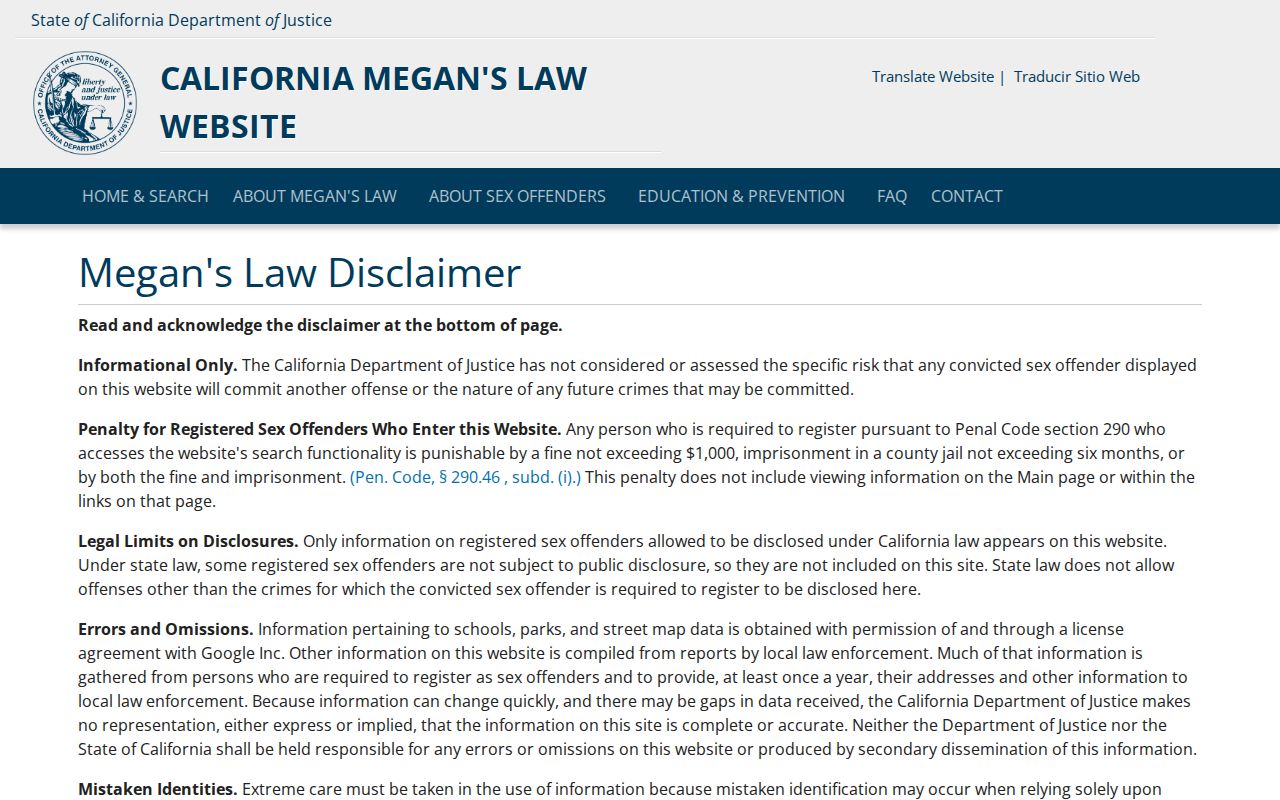
The registry image links to the official search. Match a lawful result with its reported location, descriptors, or case reference and do not infer more than the database states. Some people are excluded from public display, so absence is not proof that no record exists.
Legal Limits on a Brea Resident Lookup
A Brea resident lookup should end at the boundary set by the source. California's Safe at Home program can suppress a participant's address. Voter data is limited by Elections Code sections 2188, 2194, and 18109. DMV information is controlled by the federal Driver's Privacy Protection Act. Court, adoption, juvenile, sealed, and confidential vital records have their own restrictions. A CPRA request can seek an identifiable existing agency record, but it does not require an office to create a directory or answer a private investigation.
Lawful personal use. Public records can support genealogy, family reconnection, property history, civic research, and scam awareness. Do not use a Brea resident lookup to stalk, harass, intimidate, or harm another person.
Verify a meaningful result with the custodian and correct the source rather than a compiled search card. The Assessor handles assessment fields, the Recorder handles recorded-index questions, the Registrar handles a person's own voter record, and the court handles its docket. That division protects both accuracy and privacy.